Habit Forming
Mastering Consistency and Self-Control
Did you quit yet? That’s not a rhetorical question. It’s an honest one.
I’m asking you to hold yourself accountable on this one, because statistically speaking, you most likely have already quit or given up on the majority of your New Year's resolutions. 23% of Americans give up on their resolutions in the first week, with the peak drop-off on the Friday of the second week, often dubbed “Quitter's Day.” If we grant ourselves a little grace, that would be this coming Friday.
By the end of the month, nearly half of all those who made some sort of resolution this year will have already quit. Come February, that number jumps to 80%. Why is it that 8 out of 10 people can’t even make it 2 months into a resolution that is intended for the length of the year, and most likely meant to be a long-term lifestyle change? The answer— Discipline.
I don’t mean that in some sort of military, exposing the weak and their lack of discipline, kind of way. The opposite, really. Most people don't understand what discipline truly is, and it’s often associated with negative connotations.— “That kid needs discipline,” “She’s undisciplined, always taking the easy way out,” “That’s what you get when you lack discipline.”
We hear phrases like these all the time, and they paint discipline as a punishment or restriction. But that’s not what true discipline is. Discipline isn’t a whip—it’s the bridge that turns intention into habit, effort into automatic wins. At Warrior Mindset, Discipline is one of our core principles along with Courage and Resilience. We define discipline as demonstrating consistency and self-control, doing what’s required even when difficult. Consistency and self-control—that is discipline.
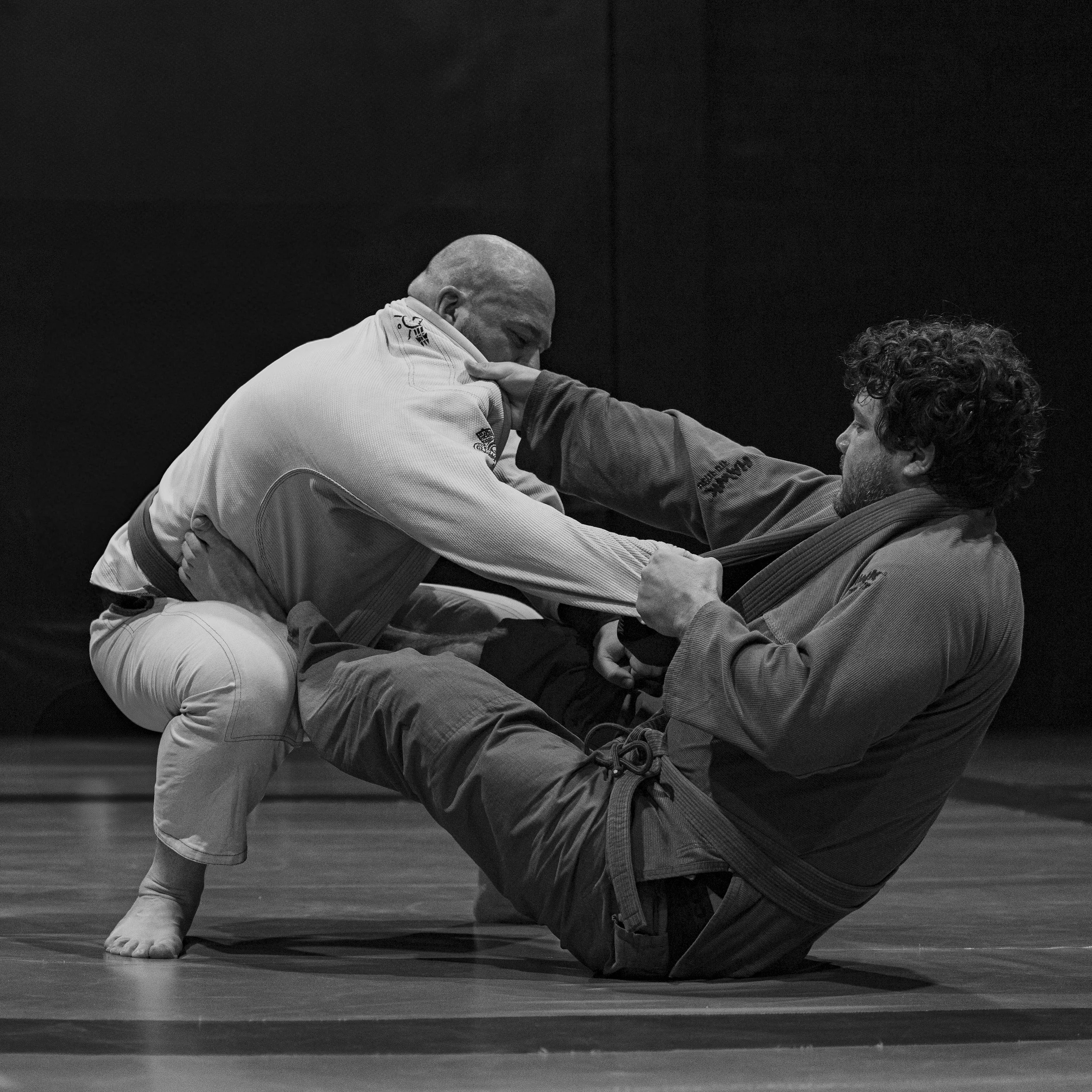
“We demonstrate consistency and self-control, doing what’s required, even when difficult. ”
Doing What's Required, Even When Difficult
A mere 9% of individuals actually succeed at their New Year’s resolutions. With a success rate of less than 10% and more than 80% not making it past February, you have to ask yourself: Why? Are we making unrealistic resolutions? Are we setting goals that are just too demanding? Possibly, but I think it is more likely that people underestimate the discomfort that will undoubtedly be present, no matter the resolution.
Many of us, myself included at times, are more in love with the possible outcome of a resolution than with the actual work required to achieve it. In fact, the process or the resources needed are often not even considered, and anything worth achieving rarely comes easy. When the reality of actually pursuing these things comes to light, the desire begins to fade into non-existence.
This phenomenon of human behavior is something fitness centers around the country cash in on year after year. I worked many years in the fitness industry as a master trainer, sports nutritionist, and fitness competitor/coach. The commercial gym you have probably signed up to before, you know, the ones that have the “initiation fees” and set you up on the monthly EFT membership. That industry consistently over-sells memberships in December and January, knowing that if everyone actually showed up, the gym would be at chaotic capacity year-round. They will risk the busy “Resolution Season” (Jan-Feb) to bank in on the remainder of the year.
Yes, most gym-goers who give up on themselves keep paying their dues month after month. Large commercial chains report that members rarely or never attend, with Planet Fitness reporting the highest rate of inactive members at nearly 80%. Can you imagine running a business where your customers pay you month after month for never providing any actual service?
Shifting Focus
A few years ago, I resolved to run 3 miles every day, no matter what, come rain or shine. That was the plan anyway. But just like the statistics show, I fell off before the end of February. But, I knew it was going to be difficult, I said, “no matter what,” I knew the weather was not going to be an excuse I could use. During those first 45 days or so, I ran many times in the rain (I was living in Florida at the time). The days when time got away from me, and family life took over, it didn’t matter; I found myself taking off for that run at 11:30 pm, needing to “get it in.” And then the day finally came when I didn’t.
Like many of us, I’m sure, I made the statement to myself, “Well, that’s over, I failed.” Because I missed one day, that somehow justified giving up on the remaining 300-plus days. To be honest, that’s painful to even write. It is such a ridiculous notion, yet one we all make. This is exactly why perfection is the lowest standard. If you have never heard that before, let me tell you why.
Perfection is unattainable by definition and is often used to paralyze real action or growth. It allows us to hide behind the veil of “perfection” from any real standards or accountability. It creates an exit at the first sign of adversity. One that may appear viable but, in reality, is impractical and irrational. That “out” typically falls into one of two categories: failure to launch, where we are paralyzed to act by the mythical mindset of “I just want it to be perfect,” and the one I just described in my own scenario.
I can admit now that I was striving for an unrealistic expectation, more for the statistic than the practice. I still ran many times that year, but I had freed myself from any real accountability or standard to hold myself to. I ran when I wanted to, when it was convenient, and that may have had some minor improvements for my fitness, but it did nothing for discipline. My focus should have been on being consistent, not perfection.
Consistency is the Key to Self-Control
My focus should have been on repeated action over time, not perfection—it's showing up daily, even imperfectly. Consistency is the gateway to self-control, and when those two powerful elements come together, discipline is the virtue it ignites.
Consistency is not about perfection. It’s not about batting a 1000 in every situation. It is the simple yet often difficult task of just showing up. And if one day you happen not to, then you show up the next day and continue. Consistency lies in the effort, not the outcome.
I can’t think of a better example than my own journey with cold-water immersion, going from a struggling cold shower to jumping into an ice bath on stage to guide thousands in the practice. In the early days of cold plunging, or ice baths, for me, a decade ago now, it wasn't about time or even temperature—it was simply about showing up.
There were days when I would jump in at 52°, and it felt like every joint was crying out for mercy. Days when I didn’t last 20 seconds in that water. What really mattered, though, were the days. Day after day, not always perfect, I made the effort to make it part of my morning, part of my training regimen, part of my life. That consistency led to temperatures below 30°, to being fully submerged beneath blocks of ice, and to pushing the time to its limit. That consistency led to self-control.
Self-control is simply the ability to silence the voice in our heads that we all share. The one who often tries to negotiate with us in strenuous situations. We don’t negotiate—period. We do what’s required, even when difficult. That level of self-control only comes from consistent effort over time.
Consistency to Habit – The Power of Routine
As time passes and our consistent effort builds self-control, we slip into the sweet spot—the realm of routine. Routine helps us form a habit loop, making any resolution a daily practice rather than a challenging goal. Consistency in a consistent routine makes the three components of a habit loop viable: cue, action, and reward.
Cue: The trigger that initiates the action, like a specific time of day or its association with another task or emotion.
Action: The actual behavior itself: the resolution, the task, the skill, or even the mental framework.
Reward: The positive outcome of the completed action that reinforces the loop.
Most studies report an average of 21-66 days for habits to solidify. Note that the variable lies in the consistency and self-control we’ve been discussing, which turns effortful discipline into automatic behavior. That is the ultimate goal.

Everything takes a measure of grit to hurdle the initial hump, the one that requires the most discipline. Take a new skill, like learning the guitar, for example. I can tell you it hurts in the beginning, especially for someone who has never played. You have to build tough fingers to play; literal calluses must form on your fingertips to be able to hit notes correctly. That hardened skin on the tips of your fret hand can only come through consistent daily effort. But as that callus forms, your ability to play more comfortably, more accurately, and with more precision increases dramatically.
This can serve as a metaphor for life. In the early stages of any goal, skill, or desire, it will require painful effort. However, through consistency (habit loop) and self-control, that pain subsides, and the need for focused effort diminishes. Tough fingers aren’t an option for serious guitar players; it’s a requirement. In whatever we pursue, we must develop the same calluses on our minds. A tough mindset isn't an option for serious achievers; it’s a requirement.
Habitual Practice Reduces the Need for Discipline
As consistent effort turns to habitual practice, discipline becomes the starter engine, but the habit loop runs on autopilot. This is the neuroplasticity of our brains: repeated actions strengthen neural pathways, making specific, consistent behaviors default over time.
This is why those who make it past 3-4 months in their New Year’s resolution often sustain it throughout the year and beyond. By that time, it's no longer "difficult”, it’s routine. The need for focused discipline is reduced day after day with each repetition. Discipline is replaced by habit.
Maintaining habits can still be a struggle when the novelty of whatever we were pursuing wears off. This is less disciplined and more nuanced. This is when evolving the practice and celebrating the milestones can serve us most. Turning down the temp on the ice bath, staying those few extra minutes, and warming up naturally through exercise can make all the difference in maintaining the habit loop.
What Now?
I’ll ask you again, "Did you quit yet?" If yes, you restart today without shame, focusing on consistency. If not, I want you to celebrate the habits that you’ve been building through discipline. If you didn’t make a resolution this year, I encourage you to pick one, commit to consistency for 30 days, and track how discipline eases over time.
Resolutions aren't about January perfection but year-long transformation—consistency starts it, discipline sustains it, and habits make it effortless. For 2026, I want you to remember we’re ultimately left with two options:
Increase your Discipline or Reduce your Desires
Ready to build lasting consistency and disciplined self-control across your team or organization? Partner with Warrior Mindset to create a proven, systems-based program that embeds these skills into daily routines, leadership practices, and organizational culture. Schedule a discovery session to assess your needs, design a tailored implementation plan, and begin measurable progress within 30 days. Commit to the process — Contact our team now to get started.