Saving Lives
What a Snowstorm Taught Me About the Appreciation Economy
I spent 23 years in the Marine Corps. Most of that time in Special Operations, surrounded by some of the best operators on the planet. I was living my dream. But when I retired, I made a decision that surprised some people—I moved my family from North Carolina back to Ohio. Not for the weather. Not for the job opportunities. For family.
My wife and I both come from families where our parents have been married for 50-plus years. We wanted our boys to grow up knowing their grandparents. To have that foundation. Shortly after we moved back, my wife lost her father unexpectedly to a heart condition. But our boys got to experience his love. They carry his memory. That decision to move home gave them something you can’t get back once it’s gone.
We love Ohio; it offers all four seasons, and the winters can be brutal, but that’s where this lesson lives.
Leadership Without a Title
Here’s what I need you to understand before I tell you this story: You are who you are 100% of the time.
Leadership isn’t something you turn on when you walk into the office or step onto the field. It’s not a title. It’s not a position. It’s who you are when nobody’s watching. It’s what you do when there’s no paycheck attached.
In order to lead, you must serve. That’s not a suggestion. That’s the requirement.
Eight years ago, when my boys were 12 and 10, we started something that’s become a family tradition. When the weather forecast starts talking about winter advisories and accumulation, my wife goes into worry mode. She’ll tell me we’re not going out in it. The boys and I laugh because we know what’s coming.
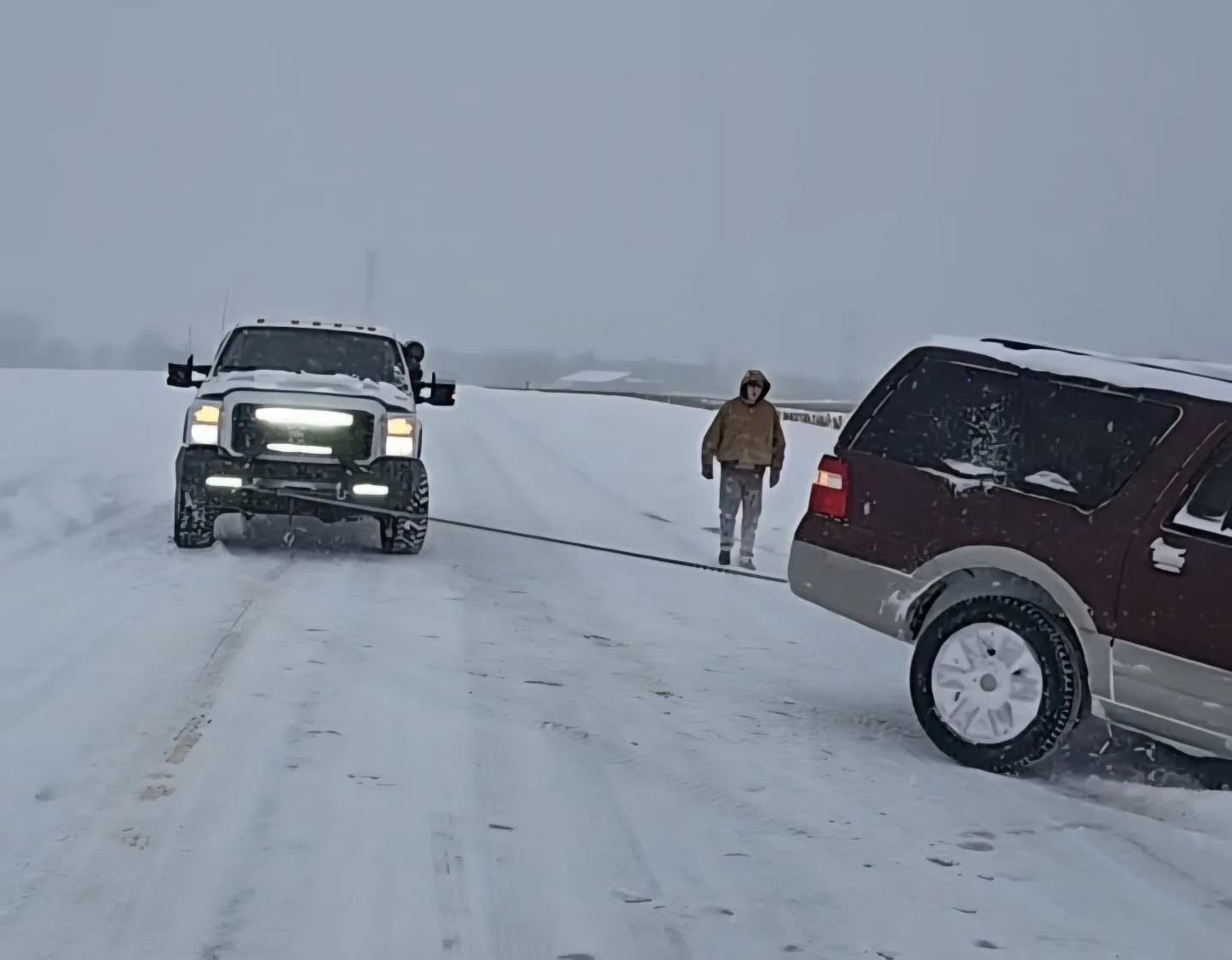
We call it—Saving Lives.
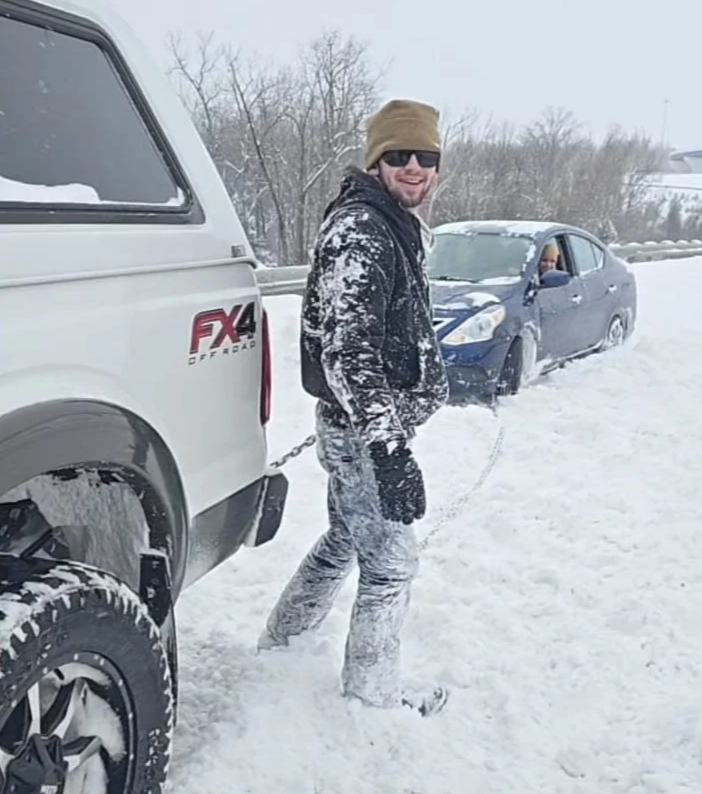
It started simple—we’d take my truck and tow straps out into the snow and pull cars out of ditches. Floods too. At first, it was partly to mess with my wife, but then we’d actually go out and help people. Over the years, it became something my boys expect. Something they look forward to. Something that matters.
This past storm dropped more than 12 inches of snow on us. Temperatures near zero. Record snowfall affected over 250 million people. Initially, I wanted to stay inside. But my older son Colton, now 20, looked at me and said, “Dad, are we going out to save lives?” That’s when I knew - this wasn’t my tradition anymore. It was ours—and that’s the point.
Servant Leadership Is Contagious
We pulled nine vehicles and over 15 people out of the snow that night. Colton’s friends came along, as usual. They weren’t asked to come. They wanted to. That’s what happens when you build a culture of service—it becomes infectious. You don’t have to mandate it. You don’t have to sell it. People see it, experience it, and they want in.
Enthusiasm is free. But so is laziness and complacency. We have to choose.
When you pull up to someone stuck in a ditch, the relief on their faces is immediate. You get them hooked up, pull them out, make sure they’re good to go. Then comes the question: ”How much do I owe you?”—every single time.
My answer never changes: “Nothing. We do this for free. Selfishly, we do it for your appreciation and to help someone out. We love driving in the snow anyway. Your thank you is the payment.” The shock on their faces tells you everything you need to know about where we are as a society.
The Real Lesson
This isn’t about me pulling cars out of ditches. This is about what happens when you live servant leadership instead of just talking about it. My boys didn’t learn this in a classroom. They didn’t learn it from a motivational speech. They learned it by watching and participating, and now they own it.
Leadership is caught more than it’s taught.
You can talk about service all day long, but if your people don’t see you serving, they won’t either. If they see you only lead when there’s a title attached or a paycheck involved, that’s what they’ll do too.
Here’s what a snowstorm revealed: We’ve created a world where people expect to pay for everything, and we expect to be paid for everything. Gratitude has become transactional. Service has a price tag. The idea that someone would help you without wanting something in return is completely foreign.
This ties directly into what I teach through the Human Blueprint.
Most of society is living in Phase 3 - the Expectation Phase. The Danger Zone. We’ve moved past appreciation. We’ve stopped choosing and started expecting. “I deserve this.” “They should do this.” “They owe this to me.” We keep score. We compare.
We’ve lost the ability to just be grateful that someone showed up.
When you operate from appreciation instead of expectation, everything changes. You’re choosing to be there. You’re grateful for the opportunity. You see value. That’s where relationships work. That’s where teams thrive. That’s where performance lives.
The people we pulled out of ditches weren’t expecting us. They were stuck, cold, and probably worried. When we showed up, they were appreciative. When we didn’t charge them, they were shocked. That shock is the problem. Service without a price tag shouldn’t be so surprising. Gratitude shouldn’t be rare.
What This Means for You
If you’re leading a team, a company, or a family, ask yourself this:
Are you building a culture of appreciation or expectation?
Are you serving, or are you just managing?
Do your people choose to be there, or do they expect to be there?
Do they see value in the work, or do they feel entitled to the position?
Are they grateful for the opportunity, or are they keeping score?
The Appreciation Economy isn’t about money. It’s about gratitude. It’s about showing up because you want to, not because you have to. It’s about helping someone because you can, not because you’ll get something out of it. Servant leadership means you are who you are all the time. Not just when it’s convenient. Not just when there’s recognition attached. You serve because that’s what leaders do. You serve because that’s who you are.
My boys learned this in snowstorms. They learned that the payment for service is the look on someone’s face when you help them. They learned that building something meaningful—a tradition, a team, a culture—requires staying in the appreciation phase. To keep choosing to stay grateful.
Now their friends join in. The next generation is learning it. That’s how culture spreads. That’s how leadership multiplies. Not through programs or initiatives, but through example. Yes, leadership begins with leading by example.
When you operate from appreciation and serve without expectation, you don’t need a price tag. The value is in the act itself. And the impact reaches further than you’ll ever know. Enthusiasm is free. So is laziness and complacency. Choose wisely.